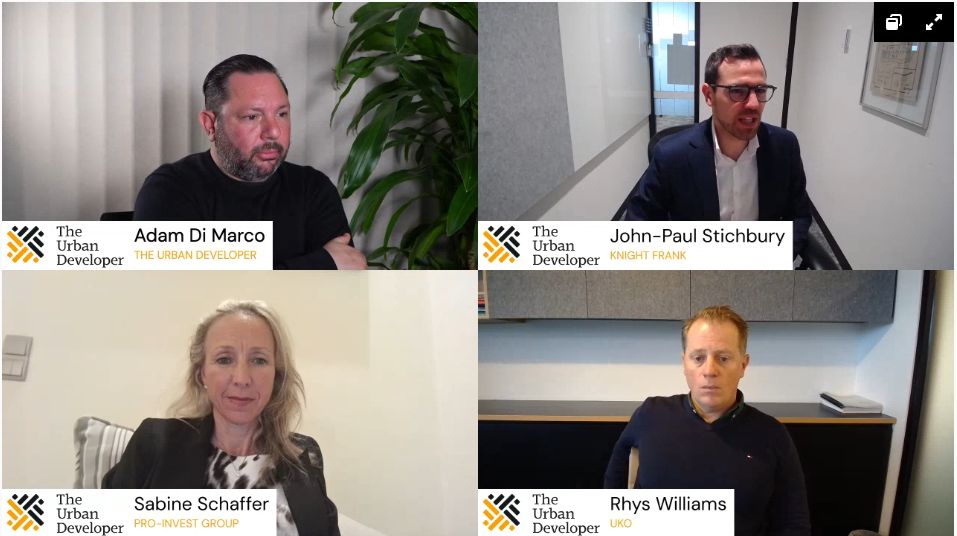
Sabine Schaffer joins The Urban Developer discussion on the future of Urban Accommodation

Pro-invest Group Co-Founder and Managing Partner, Dr. Sabine Schaffer, joined The Urban Developer for a recent webinar exploring the evolution of Australia’s Urban Accommodation sector and the growing institutional interest in alternative accommodation models.
Moderated by Adam Di Marco, Founder and Publisher of The Urban Developer, the discussion brought Sabine together with John-Paul Stichbury, Knight Frank, and Rhys Williams, UKO, to examine the trends shaping the sector across planning, development, operations, investment and customer experience.
A central theme of the discussion was the continued maturation of Urban Accommodation in Australia, with the sector increasingly moving beyond individual asset types towards professionally managed accommodation platforms supported by strong operating expertise.
The panel highlighted Sydney’s strong underlying fundamentals, including longstanding accommodation demand and planning settings that have historically supported alternative accommodation formats. The discussion also considered how institutional interest is beginning to expand beyond Sydney and Melbourne into other metropolitan and regional markets, including Newcastle and the Gold Coast.
Sabine shared Pro-invest Group’s perspective on the importance of applying a hospitality-led approach to the sector, particularly as customer expectations around flexibility, convenience and experience continue to evolve.
Drawing on Pro-invest Group’s operational real estate expertise, Sabine reflected on how many of the principles now shaping Urban Accommodation have long been central to hospitality: understanding the customer, delivering consistent service and creating well-designed spaces that people value and want to return to.
The discussion also explored the growing importance of amenities and shared spaces, including co-working, wellness and communal facilities, as customers increasingly seek quality accommodation alongside flexibility, convenience and opportunities for connection.
From an investment perspective, the panel considered opportunities across both adaptive reuse and new development, with different pathways emerging for investors seeking exposure to a sector supported by strong demand fundamentals and increasing institutional participation.
One of the key takeaways from the session was the continued evolution of Urban Accommodation as an institutional real estate sector, with operational capability, customer experience and effective use of space becoming increasingly important alongside the underlying real estate.
We thank The Urban Developer and the wider panel for an engaging discussion on the future of Australia’s Urban Accommodation sector.